NAM: Neural Amp Modeler

Either way, it's another hint NAM support may very likely come to the Stadium platform eventually. Pretty sweet.
There's no real link between Line6 and the Yamaha Innovation Fund, from what I can tell. They're owned by the same parent company, indeed. But that doesn't mean much.

Although yes, Yamaha have to be getting something out of the deal - they're not just going to fund companies without some return.
 
Either way, it's another hint NAM support may very likely come to the Stadium platform eventually. Pretty sweet.
I highly doubt that. It's probably using the same or very similar technology in the background, but to them as a company it's probably more about standing out and having a USP. Therefor they always point and market out their "awesome" proprietary stuff (am I the only one to who "proprietary" has a negative connotation?).
Line6 does great stuff, good products with long term support. But they're definitely not into opening anything up. The pressure has to be high for them to "natively" integrate NAM in some shape or form.
 
I highly doubt that. It's probably using the same or very similar technology in the background, but to them as a company it's probably more about standing out and having a USP. Therefor they always point and market out their "awesome" proprietary stuff (am I the only one to who "proprietary" has a negative connotation?).
Line6 does great stuff, good products with long term support. But they're definitely not into opening anything up. The pressure has to be high for them to "natively" integrate NAM in some shape or form.
Eric didn't rule it out though and with Fractal already disclosing they're going to add NAM support, I think L6 will very likely do the same (even if only to not loose the mindshare imho).
 
It is certainly possible. I'd say one day it might even be possible to have generic weight mapping technology, that takes all of these platforms and essentially makes them all cross-compatible. That would be kinda cool.
 
Eric didn't rule it out though and with Fractal already disclosing they're going to add NAM support, I think L6 will very likely do the same (even if only to not loose the mindshare imho).
Would be great! I'm also curious to see if they add it only to the new line or to the older ones as well. My assumption is that the HX Stomp for example won't get the update if it happens, probably the DSP is too weak.
 
It is certainly possible. I'd say one day it might even be possible to have generic weight mapping technology, that takes all of these platforms and essentially makes them all cross-compatible. That would be kinda cool.
That would actually be amazing.
 
Tone3000 living it's best life right now.

Yamaha:

1768997133977.png
 
It is certainly possible. I'd say one day it might even be possible to have generic weight mapping technology, that takes all of these platforms and essentially makes them all cross-compatible. That would be kinda cool.
Indeed...from a consumer perspective. As a company that would sound frightening to me, as there is not much left to separate the different products from each other.
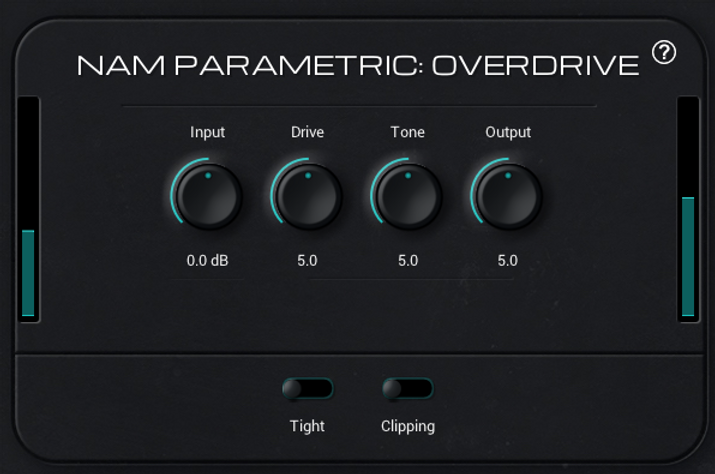
There's still AMP modelling with twisting knobs, which still cannot be accomplished using NAM. But I think the market for that might be way smaller.
 
There's still AMP modelling with twisting knobs, which still cannot be accomplished using NAM. But I think the market for that might be way smaller.

That's not an accurate statement at all; have a look here:


That's already 2 years old & folks like Two Notes and @ArteraDSP have already done parametric models using neural-networks.
 
Last edited:
A new blog post has just been published on Tone3000.

TLDR: TONE3000 and Steve Atkinson are partnering to launch the next generation of Neural Amp Modeler. It's called A2.

Read all about it here: https://www.tone3000.com/blog/a2-next-generation-neural-amp-modeler

«When A2 launches, we'll retrain every single NAM profile uploaded to TONE3000 to support the new architecture. Hundreds of thousands of tones, from vintage Fender amps to modern high-gain rigs, classic bass preamps to boutique pedals, will be available as A2 models from day one.

Both A1 and A2 versions will remain available, giving you flexibility to use whichever works best for your workflow and hardware.»

@2dor:
As I understand it, this means that your free «community packs» on T3K will be retrained to be A2 versions by T3K. What will happen to the more extended packs on your Ko-fi shop? Will they be retrained as well?
 
«When A2 launches, we'll retrain every single NAM profile uploaded to TONE3000 to support the new architecture. Hundreds of thousands of tones, from vintage Fender amps to modern high-gain rigs, classic bass preamps to boutique pedals, will be available as A2 models from day one.

Both A1 and A2 versions will remain available, giving you flexibility to use whichever works best for your workflow and hardware.»

@2dor:
As I understand it, this means that your free «community packs» on T3K will be retrained to be A2 versions by T3K. What will happen to the more extended packs on your Ko-fi shop? Will they be retrained as well?

I'll get back to you on this as soon as poss.
 
«When A2 launches, we'll retrain every single NAM profile uploaded to TONE3000 to support the new architecture. Hundreds of thousands of tones, from vintage Fender amps to modern high-gain rigs, classic bass preamps to boutique pedals, will be available as A2 models from day one.

Both A1 and A2 versions will remain available, giving you flexibility to use whichever works best for your workflow and hardware.»

@2dor:
As I understand it, this means that your free «community packs» on T3K will be retrained to be A2 versions by T3K. What will happen to the more extended packs on your Ko-fi shop? Will they be retrained as well?
The packs I posted there are sold as-is.

That said, I'm 99.99% sure they'll get the A2 treatment one way or another. Any upcoming packs after A2 is publicly available will leverage A2 straight up.

FWIW, the REVyHI and xSTD are still bangers - I do wonder how A2 will compare against those. I did see new activation functions being used in Steve's recent post (3 hours ago) and that SiLu one is pretty great for a smooth, natural response:

 
I was just reading the paper on parametric modeling in the last few days and curious if y'all have experimented with this approach. In my mind, parametric is the only way open source modeling will stay attractive compared to most commercial solutions. People want models that behave smoothly as you adjust parameters, not deal with dozen of files etc. Doesn't seem like Steve is working on this or a focus of NAM for the immediate future but perhaps I should ask in the repo. Now that A2 model is out, I may look into exploring adding parameters to the A2 model. Seems like he did more than just cascade several models, he has improved/changed the architecture.

I don't really care much about the active learning part since realistically most of us would do a lot of the training manually so initial would pick extremes and then potentially pick other values based on error estimates. My interest in this is both from a practical perspective of having a model that actually has parameters modeling a real instrument but also theoretically by asking the question of how much can a normal NAM model reliably represent "several" models in one when you think about parameters. It will also be interesting to see if cascading more models can get you to scale up your model if you add more parameters.
 
I think parametric capture is going to be big in the not too distant future. For those with a little tech skills, and some cheap model airplane servos, it wouldn’t take much to build a device to do the knob turning like NDSP’s TINA. Maybe $100 or less for a DIY build.

The key will be the software. Software to control the servo’s, software to do the captures and determine how many and what settings it needs to capture, and then obviously the player software that can take the capture and present it in a usable form to the guitarist.

If I was putting time and money into capture tech right now, that would be a big focus because the basic sound quality is there and this would be the next big competitive advantage that would allow captures to take away the advantage of traditional modeling.
 
I found it interesting that little Blackstar amp (Beam) is supporting the A2 amp captures:
The Beam Mini will support Architecture 2 (A2), the next generation of Neural Amp Modeler. A2 is more efficient, enabling NAM to run natively on a wider range of devices, while further improving the feel and realism that have made NAM widely regarded as the most accurate modeling technology available.

Wondering if this is the motivation for the conversion of the T3000 library to A2.

Also wondering if the A2 models which can run on that little box (almost certainly not sporting state of the art DSP) can not be back filled to some existing digital products that are already in the wild like stadium/fractal. We'll also likely see stuff from the Hotones of the world, I would think, too.
 
I was just reading the paper on parametric modeling in the last few days and curious if y'all have experimented with this approach. In my mind, parametric is the only way open source modeling will stay attractive compared to most commercial solutions. People want models that behave smoothly as you adjust parameters, not deal with dozen of files etc. Doesn't seem like Steve is working on this or a focus of NAM for the immediate future but perhaps I should ask in the repo. Now that A2 model is out, I may look into exploring adding parameters to the A2 model. Seems like he did more than just cascade several models, he has improved/changed the architecture.

I don't really care much about the active learning part since realistically most of us would do a lot of the training manually so initial would pick extremes and then potentially pick other values based on error estimates. My interest in this is both from a practical perspective of having a model that actually has parameters modeling a real instrument but also theoretically by asking the question of how much can a normal NAM model reliably represent "several" models in one when you think about parameters. It will also be interesting to see if cascading more models can get you to scale up your model if you add more parameters.
IMHO that's _precisely_ what he's keeping to himself (the parametric stuff); the man's quit his job to do full-time NAM and seems to be involved with several vendors which released parametric models (ie. Two Notes and the TSM-AI line of amps in Genome).

I'd love to be able to do parametric representations of some of my amps eventually.
 
Back
Top