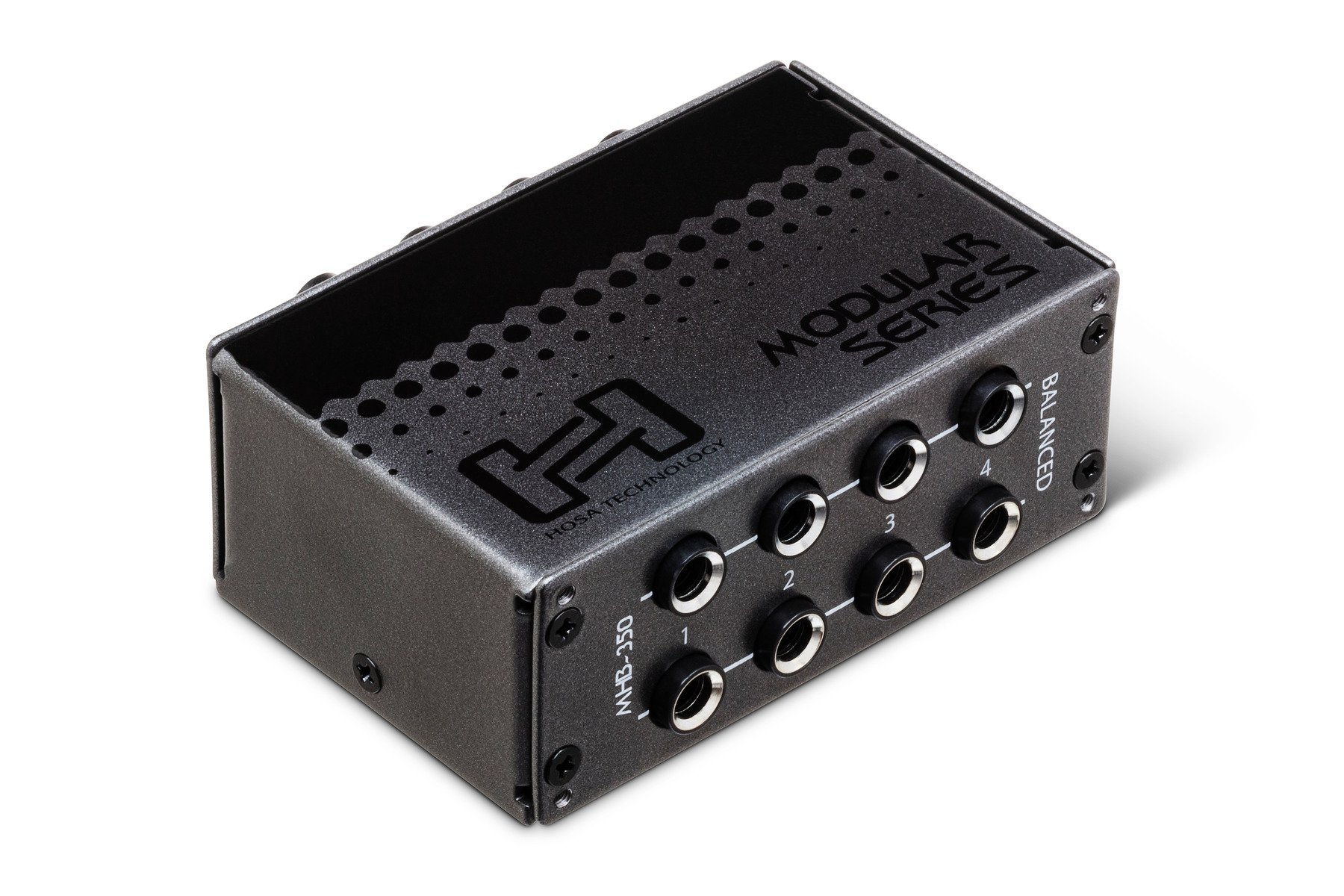
Balanced line level should split just fine, you can use a patchbay and have it half normalled to do the mult.
Per ChatGPT
It’s technically fine to split a balanced line-level signal on a patchbay because of how professional audio gear is electrically designed.
1. Line outputs are low impedance
Most professional line outputs have an output impedance around 50–200 ohms. This means they can deliver signal easily without being affected by what they are connected to, within reason.
2. Line inputs are high impedance
Line inputs are typically 10,000 ohms (10 kΩ) or higher. High impedance inputs draw very little current from the source.
3. Splitting does not overload the source
When you split a signal to two inputs, those input impedances are effectively in parallel. For example:
Two 10 kΩ inputs in parallel = 5 kΩ total load.
Even 5 kΩ is still vastly higher than a 100 ohm output impedance. This large ratio (50:1 in this example) means:
• The source is not stressed
• Signal level remains effectively unchanged
• Frequency response is unaffected
This is called impedance bridging. Modern audio systems are designed around this concept.
4. Balanced connections remain balanced
A balanced output drives two signal conductors (+ and –) plus ground. When you split the signal, both conductors are still duplicated equally. This preserves:
• Noise rejection
• Common-mode rejection
• Signal symmetry
So you do not lose the benefits of balanced wiring by splitting passively.
5. Why this is specific to line level
Line-level outputs are active, buffered circuits. They are meant to drive multiple loads.
Instrument pickups and some vintage gear are passive, high impedance sources. Splitting those does cause level loss and tonal change. That is a different electrical situation.
l
When splitting can cause issues
Rare but possible cases:
• Very old or unusual output designs
• Unbalanced outputs into multiple destinations
• Extremely long cable runs
• Ground loop problems
But with modern professional equipment, passive multing on a patchbay is standard practice.