First of all, in general it's important to remember: placing things on strong beats emphasizes what you place there. Dynamics and accents are a whole thing, but this is typically true.
First, what are your thoughts on this? Is it useful to pursue?
imo it's a useful thing to be able to do. True, almost no one is sticking to that
strictly outside of exercises. The bebop players that idea is based on certainly didn't (even less so earlier and later players)... BUT they did do it A LOT, even mostly (even if they weren't consciously thinking about it). It works, it helps outline the harmony in a strong way, and it gives a sense of forward motion, and related techniques are practically useful when you've got a lot of fast chord changes coming at you.
Second, how does one go about doing this? It seems fairly easy if one is playing 8th note scales so that the root, the third, then fifth fall of the beat, as an example. But otherwise, it seems impossible to sort that out in real time.
There are a lot of ways to approach it. The eight note bebop scale thing you mentioned is the easiest, and outside of that it's just having good awareness of where you are in the rhythm and what the current chord tones are. Practicing arpeggios can help with the latter. Ideally, you want to hear a chord and just immediately find the roots and the chord tones in relation.
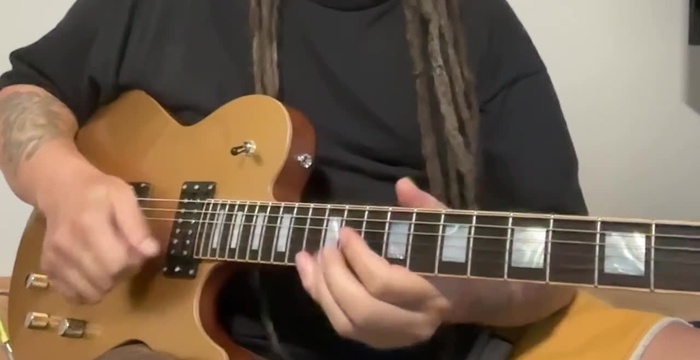
There are a lot of strategies for the rhythmic awareness aspect too. If you're on guitar, you can focus on keeping constant picking hand motion so you're always doing downstrokes on the beat and upstrokes on the off beat. Learning some flatpicking and bluegrass guitar arrangements of fiddle tunes etc can help too, since those players tend to be strict about this (e.g.
https://acousticguitar.com/learn-th...s-hornpipe-and-build-your-flatpicking-skills/ &
https://acousticguitar.com/learn-to-play-big-sciota/ ). In general just feeling the rhythm with your body in anyway that is helpful to you.
The idea in general is that you get comfortable enough with it where you don't have to work it out in real time, that it's internalized, and that you just do it. You just have to do it a ton to get there, unfortunately lol. The pros aren't really thinking about this stuff consciously because of their experience (and knowing what it sounds like).
But...
Is it a matter of learning lines that have those properties and then regurgitating them? Or something else?
...this too! I mean, I wouldn't put it like that, because it's not a negative thing, but yeah learning certain lines that just work over certain types of chords or sequences is very helpful in the moment. That doesn't mean your improv just becomes a series of pre-made lines, but it's something you can fall back on when you need / want to, and also it's a structure you can play with too. And you can start these lines on different beats, break them up into smaller chunks, connect different ones in different ways, use rhythmic variation, etc.. A lot of the famous bebop players (like Parker, as an obvious example) used a lot of "stock lines", but used and combined them in creative ways to get effectively unlimited variations. It becomes its own creative approach to expression rather than just regurgitating.
Again, once you are able to do this sort of thing on command, you don't need to stick to it strictly. It becomes another tool you can use, and another sound and effect you can pull out, when you think the context is right.
And sometimes doing a few lines like this will make a stronger melodic part or "out" bit or a held or repeated note or riff or whatever have an even stronger effect.
There are other factors too, like intentional "clashes" between the harmony the improviser is outlining and the underlying harmony played by accompaniment (e.g. ivm7 outlined over IV7, im7 over V7), tritone superimposition, or simple things like just outlining the V over a ii-V, not to mention anticipations and all that.