Line 6 Helix Stadium Talk

I haven't had both a real amp and a modeler+FR at the same time in the rehearsal place (had to sell the amp to buy stuff) but I certainly haven't missed a thing since I switched. Neither had any of my bandmates. Maybe a thorough test with both playback systems would have risen certain differences, but sticking to the basics, it felt just as good.
Actually, it felt a GREAT deal better when carrying it up the stairs ;).
 
Added a couple posts with a large pile of Proxy clones of my various drive and fuzz pedals. This is less of a "HEY THESE TONES ARE AMAZING" and more of a study of how Proxy is handling different types of drives. The fuzz faces arent great. The drives are better.

 
Is current modeling and capture technology good enough for both live use and recording? Yes, of course. That doesn’t mean there isn’t room for further improvement.

I believe that people who say or think they don’t care about accuracy actually do - at least implicitly. They may be perfectly satisfied with their digital tools in their current state and may not want to, or be able to, compare them with the analog gear they emulate. Nevertheless, they would still benefit from further improvements in digital technology driven by the pursuit of accuracy, just as they have in the past.
 
Nevertheless, they would still benefit from further improvements in digital technology driven by the pursuit of accuracy, just as they have in the past.

Maybe. Maybe not.
But one thing is 100% for certain: I would benefit *much, much* more from improvements in all sorts of other areas. And when I'm saying "much, much" I'm really talking magnitudes more.
 
As expected, perhaps? Have you tried making captures of these with NAM, Tonex or NDSP tech - and if so, how do they compare?
Definitely as expected. The Stadium sends are definitely active so the fuzz doesn’t see the pickup like it would if you were plugged in, so the characteristic behavior isn’t there. Normal ODs and distortion does better.
 
Maybe. Maybe not.
But one thing is 100% for certain: I would benefit *much, much* more from improvements in all sorts of other areas. And when I'm saying "much, much" I'm really talking magnitudes more.

I of course agree that there are many other aspects and areas that deserve improvement as well - UI/UX issues, for example, and exploring new possibilities like Line 6 is doing with Stadium. That doesn’t mean improving accuracy is only of interest to “nerds”.

I remember how blown away I was by the Axe-FX Ultra about 15 years ago. It was the first time I considered modeling to be a real alternative to my tube amps. It could recreate almost anything - and go beyond it. Then I got the Axe-FX II… oh my! Then further progress happened, driven by Cliff’s pursuit of accuracy. And now my AM4 is on another level!

My point is that people have always claimed that the current level of accuracy is “good enough”, and that the “nerds” should stop complaining. But the continued pursuit of accuracy has been fruitful, and the technology has advanced to a level where everyone seems to agree that the new tech is far better than the old in every way. You find very few arguing that going back to older tech would be acceptable - even though that was considered to be as-good-as-it-will-get at the time. And yet, the “nerds” are again told to stop pushing for further improvements, because there are supposedly more important issues at hand.
 
Definitely as expected. The Stadium sends are definitely active so the fuzz doesn’t see the pickup like it would if you were plugged in, so the characteristic behavior isn’t there. Normal ODs and distortion does better.
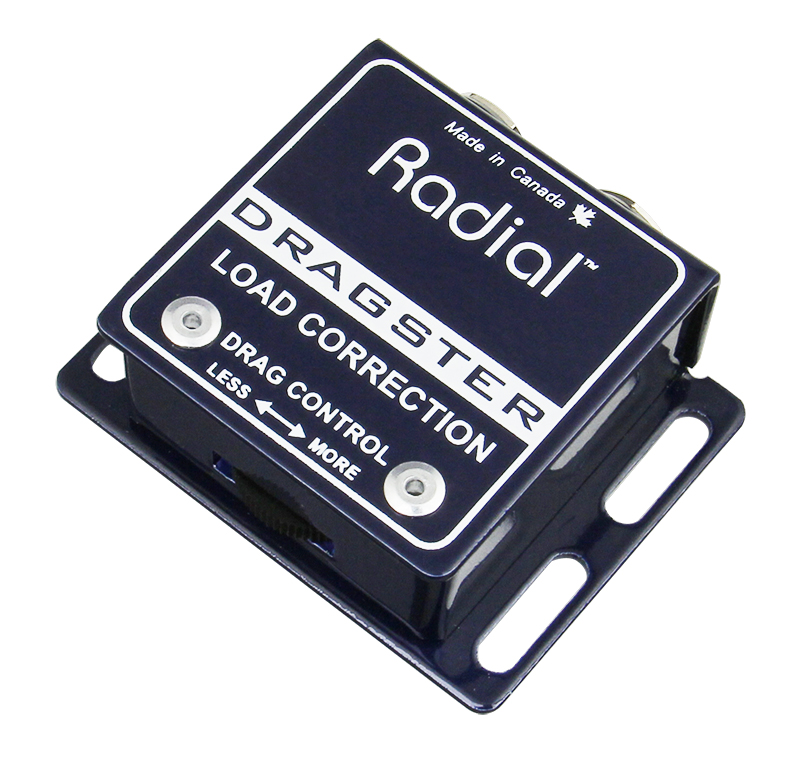
Maybe this would set the correct impedance that the Fuzz sees during the capture…

1775089043140.png


Seeya

Joe
 
I of course agree that there are many other aspects and areas that deserve improvement as well - UI/UX issues, for example, and exploring new possibilities like Line 6 is doing with Stadium.

Tbh, apart from the UI (which apparently is excellent on the Stadium), so far there's exactly *zero* new possibilities that would peak my interest (I would very likely never use Showcase at all). No new and exciting FX, no new and exciting ways to create wicked sounds, etc. (see my last longer post for reference).

That doesn’t mean improving accuracy is only of interest to “nerds”.

I never said so - but it seems to be the only focus in this thread. For whatever reasons, and it's defenitely not live player demands (no offense meant at all), so of little interest for me.
Yes, I still enjoy the Freeman-ified 2203 in the OG HX series, I also prefer the amps released later over the old ones, and - most of all - *yes*, I do experience some tonal improvements in my live rigs after having switched to Tonex Ones as my core sound suppliers, mainly in the "feels great" deparment.
Still, if I had to choose between "Agoura, Proxy and nothing else" and "old amps but new FX and tweaking options", I would go for the latter without even the slightest doubt.
 
Added a couple posts with a large pile of Proxy clones of my various drive and fuzz pedals. This is less of a "HEY THESE TONES ARE AMAZING" and more of a study of how Proxy is handling different types of drives. The fuzz faces arent great. The drives are better.

Thanks for doing these - I appreciate you sharing and I’ll give them a go later :)

Definitely as expected. The Stadium sends are definitely active so the fuzz doesn’t see the pickup like it would if you were plugged in, so the characteristic behavior isn’t there. Normal ODs and distortion does better.

That’s weird from my experience with doing this but I have a caveat - my experience with fuzz pedals has either been ‘I made it’ or ‘I’m using a model on a digital device’. With the Proxy capture I did of my home brew thing (which is based on a fuzz face circuit so has a low input impedance) I found the physical pedal put up front of the stadium reacted broadly similar to the proxy model I made in terms of clean up - I didn’t A/B the volume roll off at the point where the stadium asks you to A/B with the pedal - I did the a/b by physically putting the pedal up front of the stadium afterwards. I completely take your point about the buffers in the loop and I don’t know why (for my particular pedal) it did a decent enough job IMO. The taper was a little different but it wasn’t night and day. I don’t understand how or why and the caveat is ‘maybe my home made fuzz face doesn’t really act like a real fuzz face’. The transistors in mine are low hfe - I can’t remember what they measured (it’s a long time ago that I made it and I stupidly didn’t record it) so it’s very likely it’s got its own thing going compared to a stock Dallas Arbiter.

Have you tried making a patch with your captures here with the fuzz first and then telling the stadium to use a 10k input impedance? I did try that with my proxy capture and found it went too far plus you obviously want that input impedance to be higher when you turn the fuzz off. So that’s not an ideal solution, more a ‘how do you find your captures vs original when you do that?’. It’s why I suggested a feature of being able to set input z on a proxy capture and- DI did respond that he understood the request.
 
Even using something like this they don't clean up properly after a buffer. It mostly fixes the full on sound but you lose most of the ability to change the sound with your volume control.

But then, that's mostly only true for traditional fuzz circuits. I have a TC Magus Pro which could get pretty close to fuzzy territory (ok, it's not as "gnarly"), which reacts incredibly well to playing dynamics and volume pot settings in a buffered environment, possibly even better than unbuffered. Same goes for HX ecosystem's Top Secret OD, which can as well cover some kinda fuzzy ground and cleans up very well.

And fwiw, if there was input volume as a modifier source (even better if there was a kind of "frequency follower" - but that might be too much to ask), you could basically tweak each and every dynamic interaction exactly the way you wanted. Which is why I would like to see modifiers added.

 
With the accuracy thing, I don’t think it’s as black and white of modellers sounding digital and amps sounding totally different. The amount they overlap is greater than ever these days - but I still think it’s worth exploring the areas where things don’t quite behave the same. The better things get, the harder it is to isolate and chase those differences.

I’m convinced there is still a way to go, across the board. That’s not to say what we have now isn’t good, we’re totally spoiled and capable of achieving great sounds. But if the goal is “can this model sound and behave just like the real thing” then I want to chase down every last detail.

I totally get that others are fine with drawing a line somewhere else, and that things are good enough. Everyone has their own marker.

I don’t think any platform is THERE yet. That goes for all the capture tech, as well as the latest and greatest in modelling. We’re spoiled with frankly incredible technology, and it’s amazing that it’s where it is already. But I also think things can (and will) progress further. And the discussion will naturally continue with every advancement and new amp model and amp modelling process that comes along. It would be wild if new things got released and no one was discussing it,
 
Thanks for doing these - I appreciate you sharing and I’ll give them a go later :)


That’s weird from my experience with doing this but I have a caveat - my experience with fuzz pedals has either been ‘I made it’ or ‘I’m using a model on a digital device’. With the Proxy capture I did of my home brew thing (which is based on a fuzz face circuit so has a low input impedance) I found the physical pedal put up front of the stadium reacted broadly similar to the proxy model I made in terms of clean up - I didn’t A/B the volume roll off at the point where the stadium asks you to A/B with the pedal - I did the a/b by physically putting the pedal up front of the stadium afterwards. I completely take your point about the buffers in the loop and I don’t know why (for my particular pedal) it did a decent enough job IMO. The taper was a little different but it wasn’t night and day. I don’t understand how or why and the caveat is ‘maybe my home made fuzz face doesn’t really act like a real fuzz face’. The transistors in mine are low hfe - I can’t remember what they measured (it’s a long time ago that I made it and I stupidly didn’t record it) so it’s very likely it’s got its own thing going compared to a stock Dallas Arbiter.

Have you tried making a patch with your captures here with the fuzz first and then telling the stadium to use a 10k input impedance? I did try that with my proxy capture and found it went too far plus you obviously want that input impedance to be higher when you turn the fuzz off. So that’s not an ideal solution, more a ‘how do you find your captures vs original when you do that?’. It’s why I suggested a feature of being able to set input z on a proxy capture and- DI did respond that he understood the request.

I’m not sure how you’re getting the results you are, but I don’t think the impedance setting is the solution. I believe the issue is that you need would need that send 4 to hit the fuzz face like a pickup so that it can demonstrate the correct behavior during capture. As things are now, Proxy is just replicating the behavior it’s observing under test…which is that of a fuzz face being hit with a buffered signal.
 
But then, that's mostly only true for traditional fuzz circuits. I have a TC Magus Pro which could get pretty close to fuzzy territory (ok, it's not as "gnarly"), which reacts incredibly well to playing dynamics and volume pot settings in a buffered environment, possibly even better than unbuffered. Same goes for HX ecosystem's Top Secret OD, which can as well cover some kinda fuzzy ground and cleans up very well.

And fwiw, if there was input volume as a modifier source (even better if there was a kind of "frequency follower" - but that might be too much to ask), you could basically tweak each and every dynamic interaction exactly the way you wanted. Which is why I would like to see modifiers added.

Yes there's fuzzes that work fine after a buffer but you wouldn't use a pickup simulator in front of those in the first place, they don't react to input impedance the same way so don't need it. I was responding to the post before mine.
 
With the accuracy thing, I don’t think it’s as black and white of modellers sounding digital and amps sounding totally different. The amount they overlap is greater than ever these days - but I still think it’s worth exploring the areas where things don’t quite behave the same. The better things get, the harder it is to isolate and chase those differences.
If we wanted to view this through the lens the scientific method provides us, the inaccuracies are kind of the exciting part - they point to clues that behaviors and parameters exist that our proposed solution has not represented. Each finding is an opportunity to more accurately describe the behavior of the amp. Seems like something we’d want our AMP MODELER to do.
 
Last edited:
I’m not sure how you’re getting the results you are, but I don’t think the impedance setting is the solution. I believe the issue is that you need would need that send 4 to hit the fuzz face like a pickup so that it can demonstrate the correct behavior during capture. As things are now, Proxy is just replicating the behavior it’s observing under test…which is that of a fuzz face being hit with a buffered signal.

I’ll play around some more later and also will try your fuzz face - obviously I can’t a/b your capture with your original but it will be interesting for me to experience what it does compared with my home brew capture.

I’ll also try calibrating my ears - I’ll put my physical fuzz in the loop (so it’s buffered) and see how it reacts to my guitar volume. I’ll then try the proxy capture and see what it does.

I mostly use a fuzz on ten / guitar on 10 when I’m wanting to melt faces so it’s entirely possible that my ‘fuzz roll off reality tolerance’ is not as fine tuned as some people :)
 
Back
Top