The Strat Thread

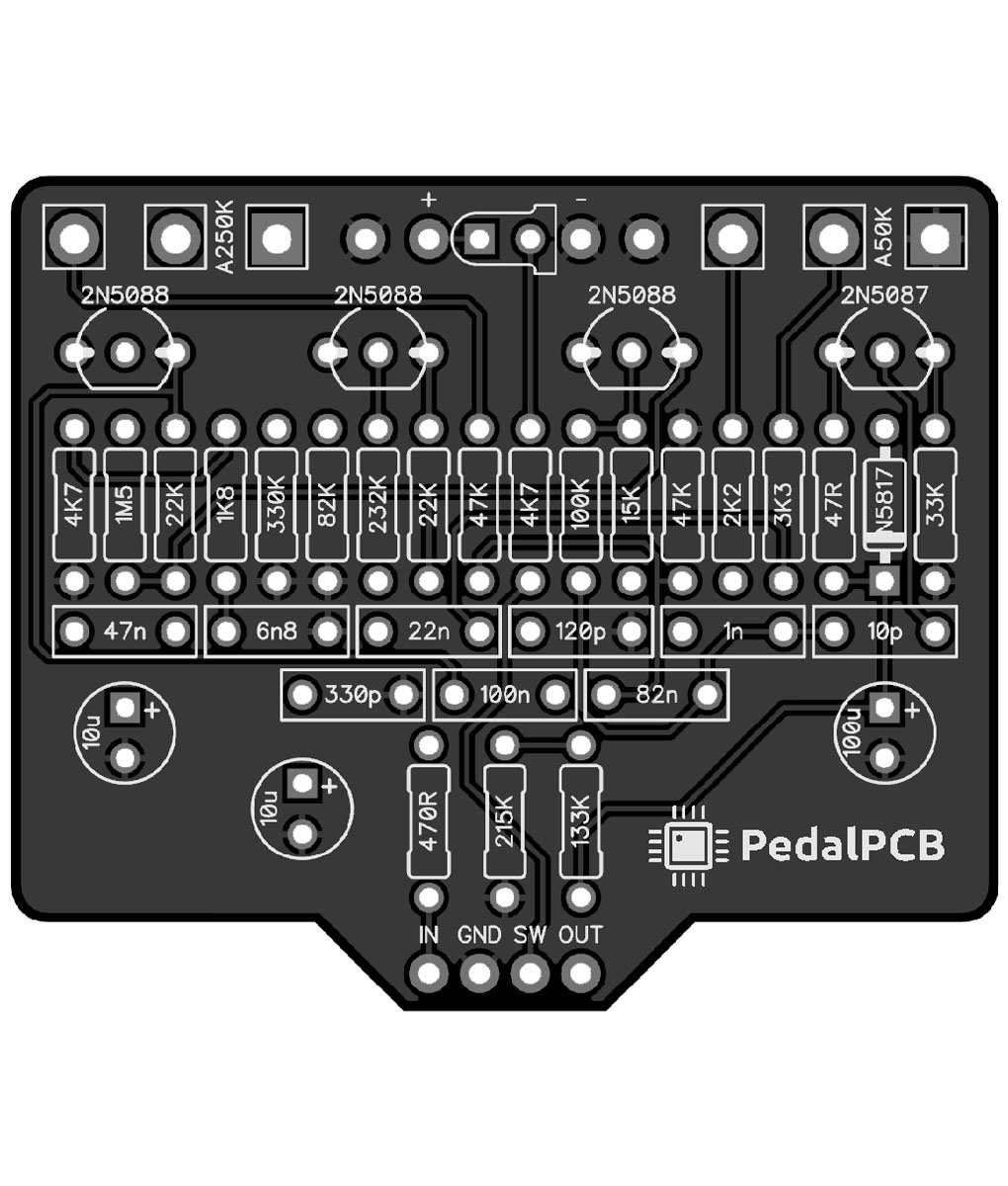
I had no idea there was so many parts in it. That's a big pcb to fit inside a strat.

View attachment 57430

Looks like pedalpcb does a board for it. No idea how you'd fit it without routing your strat though.


JFC!! I might just end up remaining with the EMG booster, I’d just prefer something with a different taper as it introduces way more mids faster than I’d prefer.
 
So here's an original clapton strat body. That's probably the only place you could rout for a pcb that big. I'd stay well clear of that

1000168401.webp
 
I had no idea there was so many parts in it. That's a big pcb to fit inside a strat.

View attachment 57430

Looks like pedalpcb does a board for it. No idea how you'd fit it without routing your strat though.


I currently have 3 Strats that I Installed it in and have done a few others. Believe it or not, the PCB has fit under the pots with no modification to the guitar route on all of them, including MIA, MIJ, a MIC Squier CV and a partscaster. The only thing needed to make it fit is to clip one corner off the PCB with a wire cutter, or any other reasonable means to cut it. It's not that big in real life.

The kit comes with a replacement volume pot (50k active vs 250k stock) and the dual TBX tone control pot and parts which I toss in a drawer.

The install is relatively easy. The output from the pickup selector goes to the PCB, then a wire from the PCB goes to the new 50k volume pot, and two more go to a 250k linear pot that acts as a blend pot between the two (one is the boosted clean signal and the other is the boosted mids). T

The third pot is your tone control. You can do whatever you want with it, including install the TBX, keep it as a standard master tone, etc. What I usually do is use a no load 250k pot as a master tone. With it out of the loop on 10 you get the classic super bright bridge position and you can also brighten the other positions, or turn it down, and you have master tone on all.

The other piece of the kit and wiring is a stereo output jack for power. I have used this, but keep in mind you won't be able to use and TRS cables or wireless units that use a TRS for charging. You could also wire it with a normal output jack and a switch.

If @DrewJD82 or anyone else needs help with how to install or wire one of these up, let me know. I am happy to help and I can take pictures of how it fits the next time I change strings on one.

 
Here is a photo (not mine) of how I made them fit. You just clip the corner by one mounting hole. Note that when the guitar is shielded like this, I wrap the PCB in electrical tape to keep any contacts from grounding out, and it will still fit with the electrical tape and copper tape.

IMG_0532.jpeg


EDIT: just had a Zoom call that got a little glitchy, so I suggested everyone shutoff their video to save bandwidth and then grabbed my Squier CV 50’s and a screwdriver! Finally a productive Zoom call!!!

I couldn’t stray too far to get better lighting so I used a piece of paper towel to help show the clipped corner with the tape pulled back. You can easily see the closest trace that you need to avoid so it’s pretty easy to do with no surgical precision needed. You can see where I snapped this one off and it is a bit rough.

IMG_2972.jpeg
IMG_2976.jpeg
 
Last edited:
Had a play around with the floating bridge idea, really not for me, so ordered some additional springs and gonna hardtail the bridge.

You have two options.

One is to “deck the bridge” which is done by adding JUST ENOUGH spring tension to hold the bridge all the way back (down) when the strings are tuned up. It this mode the trem still works to lower pitch but not raise it. Benefits include tuning stability, especially if you break a string, and measurably better sustain. I have seen more than one guitar with two screw trems damaged where people put in a bunch of springs and cranked the claw down and ripped the body wood around the screws. Don’t do this!

The other option is to block the trem from moving in either direction, usually with hard wood wedges. This turns it into a hard tail, but it can still sound and resonate a little differently than a true hard tail because of the bridge and steel block. I would suggest caution hammering in wedges as well.
 
You have two options.

One is to “deck the bridge” which is done by adding JUST ENOUGH spring tension to hold the bridge all the way back (down) when the strings are tuned up. It this mode the trem still works to lower pitch but not raise it. Benefits include tuning stability, especially if you break a string, and measurably better sustain. I have seen more than one guitar with two screw trems damaged where people put in a bunch of springs and cranked the claw down and ripped the body wood around the screws. Don’t do this!

The other option is to block the trem from moving in either direction, usually with hard wood wedges. This turns it into a hard tail, but it can still sound and resonate a little differently than a true hard tail because of the bridge and steel block. I would suggest caution hammering in wedges as well.
Thanks.

Yeah when I say hardtail it, It's not in the truest sense of the word. It was just gonna be by adjusting the trem claw screws with the 3 springs first and pulling the bridge back towards the body, I wouldn't whack a wedge/block in there.

I got the springs in case there was any issue, didn't spend a fortune on the springs, they were a "just in case" thing.
 
It's here! :pickle

As requested in my order, the guitar arrived perfectly set up for D standard and equipped with 10-52 strings. The intonation and string action are perfect, and the nut slots were filed down very precisely to accommodate the thicker strings. And apart from a slightly sharp edge on the 3rd fret, all fret ends are super smooth. Honestly, it's hard to believe how good this guitar is for just 750 euros (and I even paid considerably less thanks to a 10% newsletter coupon) – and then it's also delivered from the factory with a perfect setup, individually tailored to the buyer's specifications, at no extra charge.

And I just ordered a white EMG SA set and an SPC control for the guitar.

IMG_1124.jpeg


Last edited:
I currently have 3 Strats that I Installed it in and have done a few others. Believe it or not, the PCB has fit under the pots with no modification to the guitar route on all of them, including MIA, MIJ, a MIC Squier CV and a partscaster. The only thing needed to make it fit is to clip one corner off the PCB with a wire cutter, or any other reasonable means to cut it. It's not that big in real life.

The kit comes with a replacement volume pot (50k active vs 250k stock) and the dual TBX tone control pot and parts which I toss in a drawer.

The install is relatively easy. The output from the pickup selector goes to the PCB, then a wire from the PCB goes to the new 50k volume pot, and two more go to a 250k linear pot that acts as a blend pot between the two (one is the boosted clean signal and the other is the boosted mids). T

The third pot is your tone control. You can do whatever you want with it, including install the TBX, keep it as a standard master tone, etc. What I usually do is use a no load 250k pot as a master tone. With it out of the loop on 10 you get the classic super bright bridge position and you can also brighten the other positions, or turn it down, and you have master tone on all.

The other piece of the kit and wiring is a stereo output jack for power. I have used this, but keep in mind you won't be able to use and TRS cables or wireless units that use a TRS for charging. You could also wire it with a normal output jack and a switch.

If @DrewJD82 or anyone else needs help with how to install or wire one of these up, let me know. I am happy to help and I can take pictures of how it fits the next time I change strings on one.

This isn’t as rough as I thought and I definitely dig the idea of an onboard clean boost!! Certainly back into consideration.
 
This isn’t as rough as I thought and I definitely dig the idea of an onboard clean boost!! Certainly back into consideration.

Honestly the clean boost is one of my favorite parts. I use vintage output single coils for their tone, but the clean boost brings the level up so I am not dealing with big input level changes on pedals and amps when swapping to humbuckers or P90’s. You also get a volume control that doesn’t roll off highs without the need for any treble bleed circuits.

Most of the time I run the midboost around 3.5 (or less) where it adds just enough to noticeably fatten the tone a bit, but it still sounds very much like a single coil Strat. But that extra mid is always on hand when you want it and its way more flexible and convenient to have it at your fingers than a mid heavy pedal on the floor.

If you can’t tell, I am a big fan. For $50 I would put one in any Strat except maybe a real pristine vintage guitar. Try one out, if you don’t like it, I’ll buy it from you. Worst case I’ll have an excuse to buy another Strat! :rofl
 
Back
Top