
You are using an out of date browser. It may not display this or other websites correctly.
You should upgrade or use an alternative browser.
You should upgrade or use an alternative browser.
Does UA have enough pedals to put out a Multi-FX/Modeler?
- Thread starter banned
- Start date


MirrorProfiles
Rock Star
- Messages
- 5,632
In 2025, I totally agree. And UA clung onto old school pricing using the success of their Apollo interfaces to justify recording through DSP plugins without noticeable latency. There are still some situations where that can be useful but it certainly didn’t need to be the only approach for them for so long.You make a good point and I agree with you, but I don’t think it was ever fair or reasonable to charge $200-400 for a single plugin, on top of the cost of the hardware it runs on.
But going back 15-20 years all plugins were way more expensive and you’d typically pay twice as much on top of those expensive plugins for Pro Tools TDM versions (which were DSP powered and required additional hardware to run a limited number on). UA are far from the only company to transition from selling $300+ plugins to selling for $29 - it’s almost an industry wide trend for every single plugin company that has been around since those days.
Check out these (especially TDM) prices:
URS N, A & S Series
For all those Pro Tools users who pine for the sound of analogue EQ, URS have recreated the equalisers from three classic mixing desks.
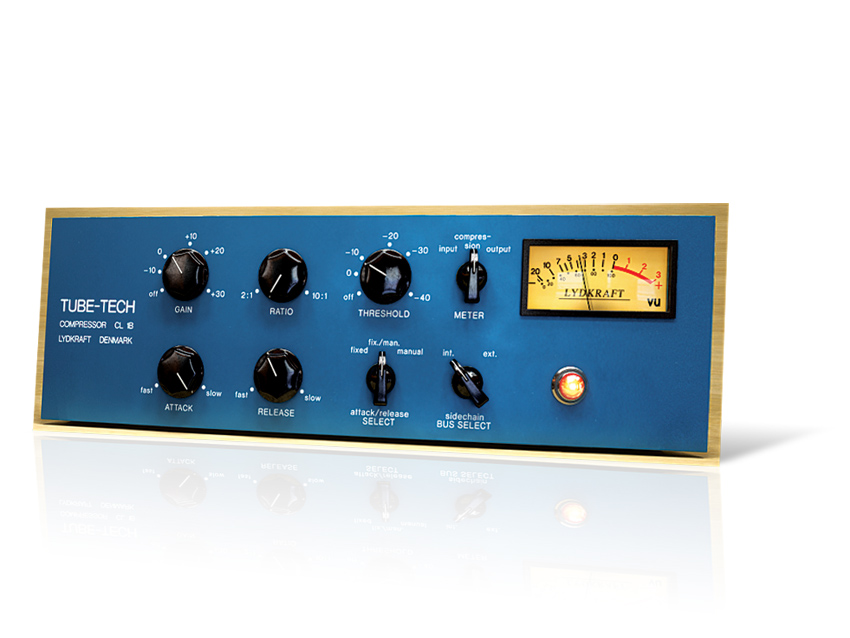
Softube Tube-Tech CL 1B review
The latest Review,,,reviews, breaking news, comment, reviews and features from the experts at MusicRadar
“ If I was an SSL aficionado I’d be hard pressed to make a decision between the Waves Native SSL plug-in collection and the DSP-driven SSL Duende. Both offer great plug-ins at not-so-competitive prices. I guess that’s my major gripe: the price. The Duende gives you two plugs-ins for $2299 and the Waves SSL 4000 Collection gives you three plugs for either $2795 (TDM) or $1395 (Native) – pretty expensive when you consider the Universal Audio UAD-1 and TC Electronic Powercore (both of which are cheaper and give you a greater selection of plug-ins out of the box). Having said that, if you must have some SSL in your arsenal but can’t afford to scrape together the thousands needed for even the most clapped-out SSL hardware, the Waves SSL 4000 Collection is an excellent place to start.”
UA being considered expensive is more to do with them stubbornly not getting with the times, largely because people were still happy to pay more for their plugins vs the competition. They’d worked themselves into being desirable, much in the way customers are happy to pay more for Fractal in return for knowing they have the highest quality from a reputable company.

QQQ
Roadie
- Messages
- 311
FTW!!It wouldn’t have MIDI
Most talk about the lack of midi, lack of updates and anything else but actual tone/sound.
I don't really disagree with any of the complaints presented, but they IMO are the best sounding on the market as far a digital goes.
Every choice in the end is a compromise. I'll use whatever fits best the gig I'm in that's within my budget.
I don't really disagree with any of the complaints presented, but they IMO are the best sounding on the market as far a digital goes.
Every choice in the end is a compromise. I'll use whatever fits best the gig I'm in that's within my budget.
Most talk about the lack of midi, lack of updates and anything else but actual tone/sound.
I don't really disagree with any of the complaints presented, but they IMO are the best sounding on the market as far a digital goes.
Every choice in the end is a compromise. I'll use whatever fits best the gig I'm in that's within my budget.
Whether they are the best sounding is debatable. Is that a blanket statement that applies to all UA pedals or are you referring to a specific amp model?

Richard_G
Roadie
- Messages
- 950
Btw @Tito83 — I seem to recall that one of the things you like about the UAFX amp pedals is their input sections and how they connect/react to your guitar. What real tube amps do you like the input section of — i.e., what do you compare the UAFX amp pedals to?
PS: This is not a “trick question.” I own and love an Enigmatic pedal (and used to own a Dream and a Ruby as well). I’m genuinely curious.
PS: This is not a “trick question.” I own and love an Enigmatic pedal (and used to own a Dream and a Ruby as well). I’m genuinely curious.

ian_dissonance
Shredder
- Messages
- 2,251
it’s weird to think that others copied them in copying hardware.Not sure this is entirely fair. Their plugins are still essentially the benchmark for analog emulation, and it’s all the competition copying their entire product line,
Are they?…. it doesn’t really change the fact that their models are still (by and large) better than the competition.
Richard_G
Roadie
- Messages
- 950
Are they?
I’d love to get tips on things that are genuinely better. I’m not talking about things that just come with less hassle or are cheaper, but things that are truly better.
nicolasrivera
Roadie
- Messages
- 674
They’ve got to sort out the MIDI problems first. After that, they can move on to designing the multi-FX unit.Yes, they'll charge a helluva premium for it. I don't think they're a huge amount better...but I'm thinking a bunch of people will jump ship if they do put out a multi-unit.
Question is - do they have enough in their 'portfolio' to put out a viable product now? Or do we need to see a few more individual pedal releases first?

sashimi
Roadie
- Messages
- 869
I do think UAD plugin emulations of their own compressors and many EQs and channel strips, reverbs, and tape emulation are better than a lot of the competitors I have tried. But when it comes to amp modeling I am not totally convinced.
And with regard to the original question, is there enough for a full blown modeler? Not even close, what do they have, 5 or 6 amp modeling pedals? They would get ripped to shreds by critics if they released an all in one modeler with 5 amp models.
And with regard to the original question, is there enough for a full blown modeler? Not even close, what do they have, 5 or 6 amp modeling pedals? They would get ripped to shreds by critics if they released an all in one modeler with 5 amp models.
Whether they are the best sounding is debatable. Is that a blanket statement that applies to all UA pedals or are you referring to a specific amp model?
In the way I'm saying, no, there's no debate. It's IMO, and that's it. There's only "I play, if I like A better than B, then that's it". Before going digital I spent years playing amps through a reactive load with IR's and everything was great. I thought "If that's ok, then a real top tier modeler will also work" and I was mistaken. After an Axe-fx Standard, Helix and Fm3, none gave me the same tone or feel. UA was the one that it for me. And I don't really even care for measuring X or Y, that's not how I chose my favorite icecream, that's also not how I think about sound.
Btw @Tito83 — I seem to recall that one of the things you like about the UAFX amp pedals is their input sections and how they connect/react to your guitar. What real tube amps do you like the input section of — i.e., what do you compare the UAFX amp pedals to?
PS: This is not a “trick question.” I own and love an Enigmatic pedal (and used to own a Dream and a Ruby as well). I’m genuinely curious.
I like every amp food group. They're just for different things. Different tools for different jobs. There's no point in giving a Vox AC30 to a metal player, just like giving a Dual Rectifier to a traditional blues player.
I just think every UA offering sound and feel very very familiar to what I know similar real life amps sound and feel. That's it.
Last edited:
Richard_G
Roadie
- Messages
- 950
what do they have, 5 or 6 amp modeling pedals? They would get ripped to shreds by critics if they released an all in one modeler with 5 amp models.
You are probably right. And it is sad, really. Too many people count the number of amp models and think that’s the most relevant metric.
I know, I know — we all pick our 5–10 go-to amp models, and those choices will differ. So yes, we want to choose our 5–10 from a large pool of options. I agree. I’ve been a Fractal user and fan for close to two decades. I like that approach.
But it’s still sad if a product were to be deemed irrelevant just because it only had five amp sims — even if those were fantastic, flexible, and covered the ‘major food groups’.
MirrorProfiles
Rock Star
- Messages
- 5,632
Look at the IK, Arturia and Slate product lines and tell me with a straight face that they didn’t even slightly look at what UAD offer and think “we should release a native version”. There’s tons of others who’ve followed their product line as a blueprint, its more than 1176/pultec/la2a’s being mainstays in studios.it’s weird to think that others copied them in copying hardware.
Competition is good, but it’s definitely a case of a lot of them looking over their shoulder at UAD. I’ve heard directly from several other companies where they’re directly comparing their own products to UAD’s as far as a reliable benchmark to validate their accuracy.
Are they?
Things are definitely more even now, but it’s still rare that other companies do a better version than UA’s own. Usually, at best it’s equally as good (speaking more about their product line in general than just amp sims). Do you disagree?
ian_dissonance
Shredder
- Messages
- 2,251
I don’t think others would have not done hardware emulation without UA. They do make great sounding plugins, as do lots of companies, better/more accurate/whatever other qualifier is impossible to verify unless compared against something arguably bad. Of course they make top quality plugins, but a mix isn’t going to fall apart if you have to use the Waves 1176 or something.Look at the IK, Arturia and Slate product lines and tell me with a straight face that they didn’t even slightly look at what UAD offer and think “we should release a native version”. There’s tons of others who’ve followed their product line as a blueprint, its more than 1176/pultec/la2a’s being mainstays in studios.
Competition is good, but it’s definitely a case of a lot of them looking over their shoulder at UAD. I’ve heard directly from several other companies where they’re directly comparing their own products to UAD’s as far as a reliable benchmark to validate their accuracy.
Things are definitely more even now, but it’s still rare that other companies do a better version than UA’s own. Usually, at best it’s equally as good (speaking more about their product line in general than just amp sims). Do you disagree?
Anyway, back on topic… I think they COULD (they could probably make a DSP box that you could load a whole shitload of their plugins) but it would probably be something stupid like “10 free FX blocks and with individual blocks for $XX or pay $XX annually to have all the blocks” and they’d still not get enough I/O and connectivity options, and a bunch of people would buy it anyways.
Last edited:
MirrorProfiles
Rock Star
- Messages
- 5,632
Doesn’t really change the fact that UA were one of the first to do it, and have always been the ones setting the bar for accuracy. Others make great stuff too, but UA has basically always been the marker that others compare against. Their devs are among the most respected in the industry, I don’t really think a debatable thing.I don’t think others would have not done hardware emulation without UA. They do make great sounding plugins, as do lots of companies, better/more accurate/whatever other qualifier is impossible to verify unless compared against something arguably bad. Of course they make top quality plugins, but a mix isn’t going to fall apart if you have to use the Waves 1176 or something.
This is exactly what their Apollo devices are. There are DSP powered amp sims, FX etc, you can do all kinds of routing. I don’t think it would be too hard for them to do a guitarist centric one, and I’d absolutely expect them to change for plugins seperately. And I also bet people would buy it too, would probably appeal to guys who already have a lot of their plugins already.I think they COULD (they could probably make a DSP box that you could load a whole shitload of their plugins) but it would probably be something stupid like “10 free FX blocks and with individual blocks for $XX or pay $XX annually to have all the blocks” and they’d still not get enough I/O and connectivity options, and a bunch of people would buy it anyways.
ian_dissonance
Shredder
- Messages
- 2,251
Their amp pedals always seemed a terrible bargain to me. $400 for a digital emulation with basically zero features. If there’s that much processing power in there that it has to be that expensive there’s no reason it can’t do more or at least have some optional FX or MIDI or something.UAD's amp pedals are great .. but it's like audiophile amplifiers. They have $25 of electronics stuffed into $1000 worth of metal enclosure and charge $25,000 for it. Those boxes could hold the entire line of algos they have.
synthpenguin
Roadie
- Messages
- 747
A big selling point of the UA amp pedals are the interfaces. Now they're not actually WYSIWYG because of the alt parameters and some of the different modes, but a lot of people are attracted to these because they can more or less dial them in like an amp with physical controls. I think it's more likely that they do something like an Iridium or ACS1 that preserves that selling point while offering a few amp options... but I also don't see it happening.
I also don't really see UA as a company wanting to provide the sort of ongoing support that such a platform would require, especially if there is no subscription or "plug out" type aspect involved.
Speaking for myself, I've thought about getting a Dream or Ruby before because the simplicity is cool, and I think a lot of their immediately-good sound comes from certain choices being (skillfully) made for you (not too dissimilar from what I think the NeuralDSP approach is). I wouldn't even consider getting a UA modeler that loses either of those things because I don't think their amp modeling is actually better than the competition that would end up being similarly priced.
I also don't really see UA as a company wanting to provide the sort of ongoing support that such a platform would require, especially if there is no subscription or "plug out" type aspect involved.
Speaking for myself, I've thought about getting a Dream or Ruby before because the simplicity is cool, and I think a lot of their immediately-good sound comes from certain choices being (skillfully) made for you (not too dissimilar from what I think the NeuralDSP approach is). I wouldn't even consider getting a UA modeler that loses either of those things because I don't think their amp modeling is actually better than the competition that would end up being similarly priced.
synthpenguin
Roadie
- Messages
- 747
This is exactly what their Apollo devices are. There are DSP powered amp sims, FX etc, you can do all kinds of routing. I don’t think it would be too hard for them to do a guitarist centric one, and I’d absolutely expect them to change for plugins seperately. And I also bet people would buy it too, would probably appeal to guys who already have a lot of their plugins already.
Can plugins be used with an Apollo in standalone mode though? I thought only routings etc were kept in memory, at least without the workaround where you unplug from the computer after startup.
An Apollo with a screen (or even just app control) that could be used standalone would be really cool.

- Messages
- 7,325
Those UA pedals have been a wild success. The Dream/Ruby are staples on pedalboard rigs. (And I’m starting to see the Lion more)
UA has more than enough quality software/models to release a full fledged modeler or multi, the question is how much would they bonk it behind some paywall or sub scheme. If they aimed at those already in their ecosystem (and have already bought a bunch of their plugs) it could work, assuming that’s a game they even feel the need to play.
I’d love to see them have some sort of loader hub where we could mix and match a chain on the grid rather than load up a bunch of isolated plugs. I’d use their native amps more if I didn’t have to stack a full chain of plugs for effects. At some point it’s just easier to load a Neural plug and have everything in one spot.
UA has more than enough quality software/models to release a full fledged modeler or multi, the question is how much would they bonk it behind some paywall or sub scheme. If they aimed at those already in their ecosystem (and have already bought a bunch of their plugs) it could work, assuming that’s a game they even feel the need to play.
I’d love to see them have some sort of loader hub where we could mix and match a chain on the grid rather than load up a bunch of isolated plugs. I’d use their native amps more if I didn’t have to stack a full chain of plugs for effects. At some point it’s just easier to load a Neural plug and have everything in one spot.
Similar threads
- Replies
- 76
- Views
- 7K


- Replies
- 30
- Views
- 6K